What 1,000,000₫ Actually Buys You in Da Nang
About €33. A hotel room, three meals, a scooter, a beach, and a beer — with change. Here is the receipt, and everything that would have blown it.
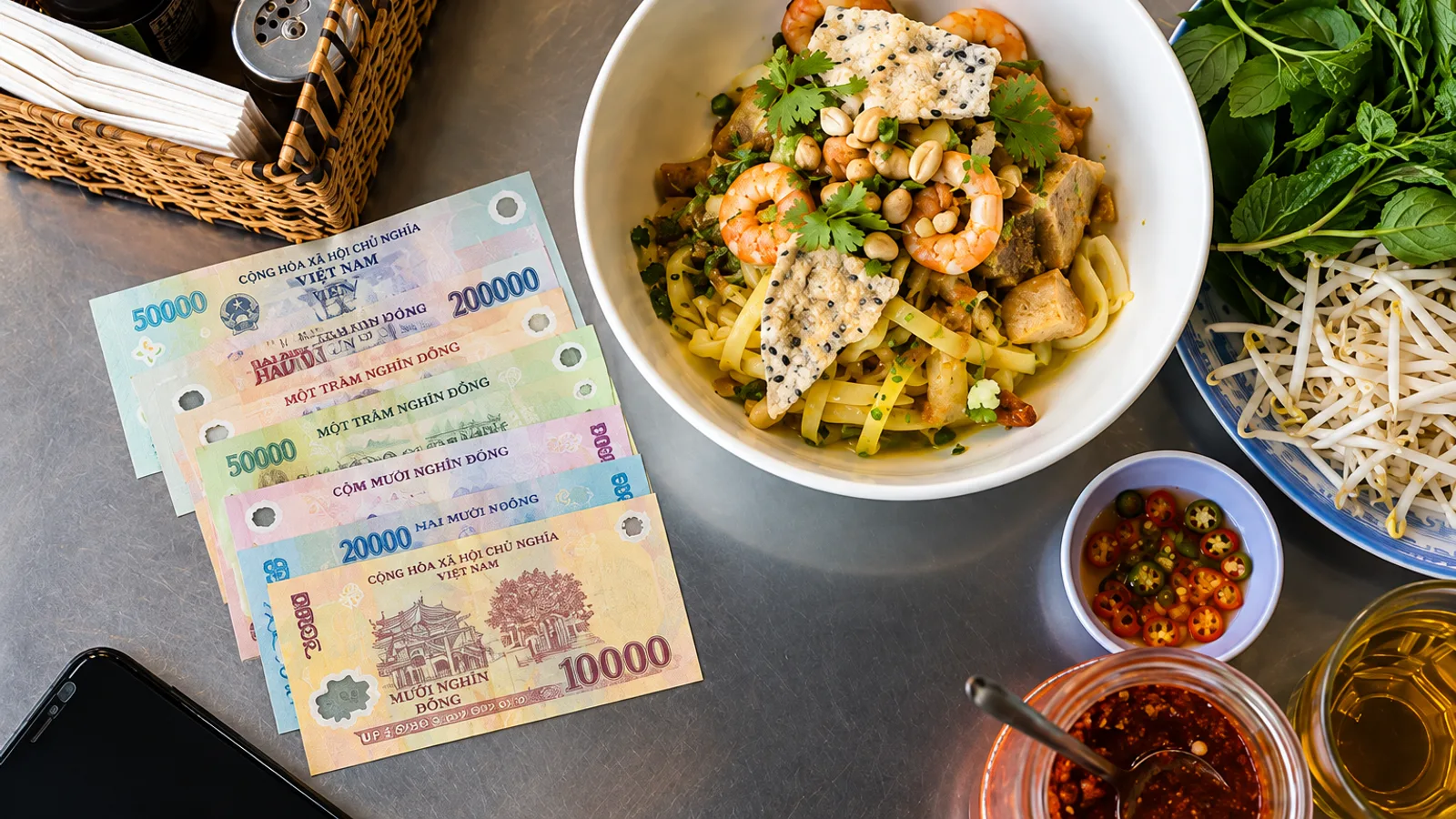
A million of anything sounds like a lot until you are holding it. One 500,000₫ note, four 100,000s, a 50 and a couple of 20s, and the stack is thinner than a paperback. That is roughly €33. In Amsterdam it is dinner for one, badly.
In Da Nang it is a day.
Not a scraping, hostel-dorm, instant-noodles day either. A good one. I wanted to know exactly where the money went, so I kept every price for twenty-four hours — the way you would if you were arguing with someone about whether Vietnam is really as cheap as people say.
Here is the whole thing, then the parts worth explaining.
One day, itemised
| What | Đồng | Euro |
|---|---|---|
| Room, An Thượng, booked three weeks out | 380,000₫ | €12.60 |
| Scooter for the day | 120,000₫ | €3.95 |
| Petrol | 30,000₫ | €1.00 |
| Mì Quảng, breakfast | 40,000₫ | €1.30 |
| Cà phê sữa đá | 20,000₫ | €0.65 |
| Marble Mountains entry | 40,000₫ | €1.30 |
| The lift, because it was 34 degrees | 15,000₫ | €0.50 |
| Two bottles of water | 20,000₫ | €0.65 |
| Cơm bình dân, lunch | 45,000₫ | €1.50 |
| Sunbed at Mỹ Khê | 40,000₫ | €1.30 |
| Coconut | 25,000₫ | €0.80 |
| Mangosteen at Chợ Cồn | 35,000₫ | €1.15 |
| Bún chả cá, dinner | 45,000₫ | €1.50 |
| Bánh tráng cuốn thịt heo, shared | 90,000₫ | €2.98 |
| Two bia hơi | 30,000₫ | €1.00 |
| Total | 975,000₫ | €32.30 |
Left over: 25,000₫. Exactly one more iced coffee, which I had.
Rates at roughly 30,200₫ to the euro, which is where things sat as I wrote this. It moves; check it before you rely on it.
The room is the whole game
380,000₫ for a night is not a mistake and it is not a hostel bunk. It is a small, clean, air-conditioned room in An Thượng, a few streets back from the beach, booked about three weeks ahead. Walk in the same day in December and the same room is 600,000₫ or gone. High season runs December to April and pushes rates up 20–30%.
This one line decides everything else. Spend 900,000₫ on a beachfront room and the day is over before breakfast. Spend 380,000₫ and you have 620,000₫ to actually do things with, which in Da Nang is a genuinely large amount of money.
Where you put yourself matters almost as much as what you pay. Three areas cover most of it.
An Thượng and Mỹ An
The foreign long-stay cluster, a few blocks behind Mỹ Khê beach. English everywhere, laundry on every corner, more coffee shops than seems structurally possible. You pay maybe 15% over the city average for the convenience. If it is your first week in Vietnam, this is the sensible landing spot.
Hải Châu
The actual city centre, west of the river, where the markets and offices are. Cheaper rooms, better and cheaper food, less English, no beach within walking distance. This is where the money goes furthest, and where you will get the most out of the phrases you learned on the plane.
The east bank near the Dragon Bridge
Splits the difference — walkable to the river, ten minutes from the beach, and priced between the two. Good if you want one evening at the bridge without a taxi.
Da Nang is small. The beach strip to the centre is about five kilometres. Almost nothing is more than fifteen minutes from anything else, so the neighbourhood decision is about atmosphere and price, not logistics.
Food is where Vietnam stops being believable
Breakfast was mì Quảng, which is the dish Da Nang argues about most. Turmeric noodles, not quite a soup, a small amount of intensely flavoured broth, pork and shrimp, peanuts, a shard of rice cracker on top. 40,000₫. Street stalls run 30,000₫, a sit-down place with fans and plastic stools runs 40–50,000₫.
Lunch was cơm bình dân — the "ordinary rice" places where you point at four or five trays of stuff behind glass and someone builds you a plate. 45,000₫. These are everywhere and they are the single best value in the country. Bánh mì from a cart is 15–25,000₫ if you want to go cheaper still.
Dinner was bún chả cá, the fish cake noodle soup that Da Nang does better than anywhere, and then bánh tráng cuốn thịt heo with a group, which is pork belly and herbs you roll yourself in rice paper. That last one was the most expensive food item of the day at 90,000₫ split between people, and it was worth it.
Three meals: 130,000₫. Around €4.30. That is not a budget-traveller stunt, that is just what eating locally costs.
The number that breaks this is Western food. A brunch in An Thượng — eggs, sourdough, a flat white — lands somewhere between 150,000 and 300,000₫. One of those is two days of local meals. There is nothing wrong with wanting eggs on toast, but it is useful to see what it costs in dishes.
If you want to go lower, Chợ Cồn is the answer. It is a covered market, not a tourist one, and the food court at the back does full plates for what a coffee costs in the beach district. Bring small notes; nobody there wants to break a 500,000.
On coffee, which is its own budget line
Vietnam takes coffee more seriously than most countries take their national sport, and Da Nang has an absurd density of places to drink it. This matters to your budget because the range is enormous.
A cà phê sữa đá — strong drip coffee over condensed milk and ice — is 20–25,000₫ at a normal Vietnamese café, which is about seventy cents. The same drink in a designer place in An Thượng with air conditioning and a laptop crowd is 55–70,000₫. Both are good. One is three times the other.
Two worth trying while you are in central Vietnam: cà phê muối, salt coffee, which sounds wrong and is not, and cà phê trứng, egg coffee, which is a whipped yolk custard on top of coffee and is closer to dessert than to a drink. Neither costs more than about 40,000₫ at a local place.
Three coffees a day at local prices is 60,000₫. Three at expat-café prices is 200,000₫. Over a two-week trip that is the difference of a couple of hundred thousand — not ruinous, but it is a whole extra day.
Getting around costs almost nothing, and that is the trap
120,000₫ for a scooter for the day, 30,000₫ of petrol, and Da Nang opens up completely: Marble Mountains south, Sơn Trà peninsula north, the Hải Vân Pass if you have the nerve and a full day.
The trap is the licence. Renting is trivially easy — a shop will hand you a bike on the strength of a passport photocopy and no questions. Being legal is a different matter, and most travel insurance will not cover a scooter accident if you were riding without the right permit. Vietnam is not a place to find that out experimentally. If you are not certain where you stand, Grab bikes are 25–40,000₫ a hop across town and you will spend maybe 100,000₫ across a whole day.
Grab is also worth having simply because it removes the negotiation. The price is on the screen before you get on, which means the airport run — about fifteen minutes to the centre — costs what it costs rather than what someone thinks you will pay.
The free half of the city
A day like this works partly because Da Nang gives a lot away.
Mỹ Khê is thirty kilometres of public beach with no entry fee, ever. The 40,000₫ in the ledger is a sunbed, which is optional and which I would skip next time in favour of a towel.
The Dragon Bridge breathes fire and sprays water on Friday, Saturday and Sunday nights at 9pm. It is free, there is no ticket, and you should be on the riverside promenade by about half past eight. Monday to Thursday the bridge is just lit up — worth knowing if you are planning which nights to be in town.
Sơn Trà peninsula — the forested headland north of the beach — costs nothing but the petrol to ride up it, and the viewpoints looking back over the bay are the best free thing in the city.
Marble Mountains is 40,000₫ to enter and another 15,000₫ if you take the lift instead of the steps. In August heat, take the lift.
When you go changes the number
February to May is the sweet spot: dry, clear, warm without being punishing. December through April is also peak season, so the weather you want and the prices you want do not fully overlap — February to April is the compromise most people land on.
September to November is the wet end of the year, with typhoons possible in October and November. Rooms get noticeably cheaper. So does everything else. But a washed-out day in Da Nang costs more than a sunny one, not less, because you end up indoors in cafés and restaurants rather than on a free beach. If you go in the rainy months, budget for the weather rather than assuming the low season rate is the whole story.
What blows the million in one move
Three things, and they are worth knowing before you plan a week:
Bà Nà Hills — the cable car and the Golden Bridge. The ticket alone runs 750,000₫ to 1,100,000₫, plus transport. It is a whole day and a whole budget, and it is the single most common way people are surprised by what Da Nang costs.
A proper night out. Local bia hơi is 10–15,000₫ a glass and keeps everything intact. A rooftop bar is €4–7 a drink and four of them plus a Grab home is your entire day.
Cash withdrawals. Vietnamese ATMs charge 50–80,000₫ per transaction before your own bank adds anything, and airport exchange counters are worse. Pull out a large amount once rather than a small amount five times, and do not change money at the airport beyond what you need for the taxi.
That last one is quietly the biggest leak in a trip like this. Take out 500,000₫ five times over a week and you have paid roughly a third of a day's budget for the privilege of touching your own money. Most of Da Nang now takes QR payments — the squares taped to every counter, from restaurants to the woman selling mangosteen at Chợ Cồn — but those run on Vietnam's domestic network and generally expect a local bank account, which is the gap we spend our days on at Lumifin. Either way: fewer, larger withdrawals.
One more small thing that costs real money over a week. The 500,000₫ note is what ATMs mostly dispense, and it is close to useless at a market stall or a street kitchen — nobody has change for it. Break the big notes somewhere that can absorb them, like a supermarket or a chain café, and keep a working float of 10s, 20s and 50s. Otherwise you will end up eating somewhere more expensive purely because they could take your money.
Four levels, same city
The million is one point on a line. Here is roughly where the others sit for one person, one day:
| Level | A day costs | What changes |
|---|---|---|
| Lean | 500,000₫ · €16.50 | Guesthouse or dorm, no scooter, street food only, beach instead of paid sights |
| The day above | 975,000₫ · €32.30 | Private room, scooter, three sit-down meals, one paid sight |
| Comfortable | 2,000,000₫ · €66 | Room with a pool, a Western breakfast, a massage, rooftop drinks |
| Bà Nà Hills day | +2,000,000₫ | The cable car ticket alone is 750,000–1,100,000₫, before transport or food |
Lean
500,000₫ · €16.50
Guesthouse or dorm, no scooter, street food only, beach instead of paid sights
The day above
975,000₫ · €32.30
Private room, scooter, three sit-down meals, one paid sight
Comfortable
2,000,000₫ · €66
Room with a pool, a Western breakfast, a massage, rooftop drinks
Bà Nà Hills day
+2,000,000₫
The cable car ticket alone is 750,000–1,100,000₫, before transport or food
Nothing on that list is the right answer. The point is that the gap between the lean day and the comfortable day is about €50, which in most European cities is the gap between two lunches.
So is a million a day realistic?
For one person, in shoulder season, eating locally, staying somewhere modest and not doing a big paid attraction — yes, comfortably, and I had change.
For two people it does not double. The room is the same room, the scooter is the same scooter. Two of you land somewhere near 1,400,000₫ for the same day, which is under €25 each.
Over a week it compounds in your favour, because the expensive things are mostly one-offs. Seven days at this level is roughly 6,800,000₫, about €225, and that already includes a paid sight, a scooter every day and three meals out daily. Add one Bà Nà Hills day and one decent night out and you are at €300 for the week, still without cutting anything.
Where it stops working is a high-season room booked late, a week of Western breakfasts, or treating the rooftop bars as normal. None of those are wrong. They are just a different number, and it is better to know that going in than to work it out from your bank app on day four.
If you want the version of this that fits in your head: the room is about 40% of the day, food is about 15%, and everything else is noise. Get the room right and Da Nang is almost hard to overspend in.
From Lumifin
A day like this runs on small, frequent payments — and most of them are QR codes now. Lumifin lets European travellers pay Vietnam's VietQR codes from a euro balance, so you are not funding the day through ATM fees.
Join the waitlist